Oxygen therapy is an essential treatment for patients who have difficulty maintaining healthy oxygen levels in their blood. It is commonly prescribed for individuals with chronic respiratory diseases, lung infections, heart conditions, and patients recovering from serious illnesses.
While oxygen therapy can significantly improve breathing and quality of life, patients often require continuous monitoring and professional support to ensure safe and effective treatment. Managing oxygen equipment, monitoring oxygen saturation levels, and recognizing warning signs can be challenging for families without medical training.
At Havenly Breeze Care, we provide professional home nursing and respiratory care services in Lahore for patients receiving oxygen therapy, helping them remain safe, comfortable, and independent in their own homes.
What Is Oxygen Therapy?
Oxygen therapy is a medical treatment that provides additional oxygen to patients whose bodies are unable to maintain adequate oxygen levels naturally.
Doctors may recommend oxygen therapy for patients with:
- Chronic Obstructive Pulmonary Disease (COPD)
- Lung infections
- Pneumonia recovery
- Pulmonary fibrosis
- Heart disease
- Respiratory failure
- Post-ICU recovery
- Severe asthma
The goal of oxygen therapy is to improve oxygen delivery throughout the body and support normal organ function.
Signs That a Patient May Need Oxygen Therapy
Patients may experience:
- Shortness of breath
- Low oxygen saturation levels
- Rapid breathing
- Fatigue
- Bluish lips or fingertips
- Difficulty performing daily activities
- Frequent respiratory distress
A healthcare professional should always determine whether oxygen therapy is required.
Why Home Care Is Important for Oxygen Therapy Patients
Professional home care can significantly improve safety and treatment outcomes.
Proper Oxygen Monitoring
Regular monitoring ensures oxygen therapy remains effective.
Personalized Care Plans
Each patient receives care based on their specific medical condition.
Reduced Hospital Visits
Professional home monitoring may help prevent unnecessary hospital admissions.
Family Education
Families learn how to use oxygen equipment safely and confidently.
Professional Home Nursing Services
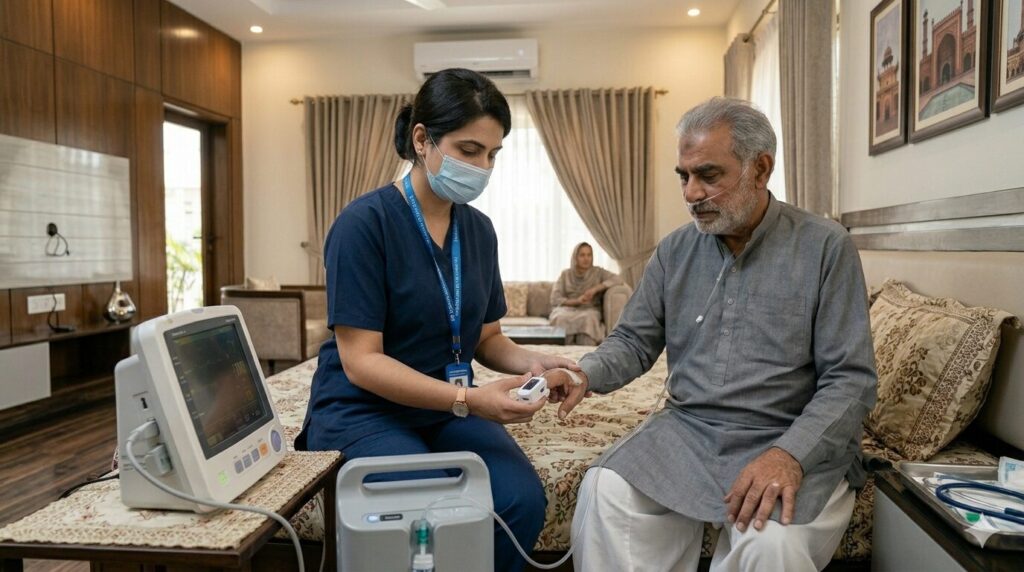
Our trained nurses provide comprehensive support for patients receiving oxygen therapy.
Oxygen Saturation Monitoring
Regular monitoring helps ensure oxygen levels remain within the recommended range.
Vital Signs Assessment
Home nurses monitor:
- Oxygen saturation
- Heart rate
- Blood pressure
- Respiratory rate
- Overall health condition
Medication Management
Many oxygen therapy patients take medications for underlying respiratory or cardiac conditions.
Patient Education
Families receive guidance regarding oxygen safety and daily care practices.
Common Conditions Requiring Oxygen Therapy
COPD
COPD patients often require long-term oxygen support to improve breathing.
Pneumonia Recovery
Some patients continue oxygen therapy during recovery after severe pneumonia.
Pulmonary Fibrosis
This progressive lung condition may reduce oxygen levels and require supplemental oxygen.
Heart Disease
Certain heart conditions can affect oxygen delivery throughout the body.
Post-ICU Recovery
Patients recovering from critical illness may need temporary oxygen therapy at home.
Oxygen Equipment Safety Tips
Safety is extremely important for patients using oxygen.
Keep Oxygen Away From Flames
Oxygen supports combustion and should never be used near open flames.
Maintain Equipment Properly
Regular inspection helps ensure equipment functions correctly.
Follow Medical Instructions
Patients should use oxygen exactly as prescribed.
Store Equipment Safely
Proper storage reduces the risk of accidents and equipment damage.
Nutrition and Recovery
A healthy diet can support:
- Energy production
- Immune function
- Lung health
- Overall recovery
Patients should follow dietary recommendations provided by healthcare professionals.
Emotional Support for Oxygen Therapy Patients
Living with a chronic respiratory condition can affect emotional well-being.
Patients may experience:
- Anxiety
- Depression
- Fear of breathing difficulties
- Reduced confidence
Compassionate caregiving and family support can improve mental and emotional health.
Warning Signs That Require Immediate Medical Attention
Seek urgent medical care if the patient experiences:
- Severe breathing difficulty
- Extremely low oxygen levels
- Chest pain
- Sudden confusion
- Bluish skin discoloration
- Loss of consciousness
Early medical intervention can prevent serious complications.
Why Families Choose Havenly Breeze Care
We proudly provide:
- Male Nurses
- Female Nurses
- ICU-Trained Nurses
- Oxygen Therapy Support
- Respiratory Care Services
- Patient Attendants
- Home Nursing Services in Lahore
Our healthcare team focuses on patient safety, comfort, and quality of life.
Benefits of Home Care for Oxygen Therapy Patients
Professional home healthcare helps:
- Improve treatment compliance
- Enhance patient safety
- Reduce caregiver stress
- Support long-term recovery
- Improve quality of life
These benefits contribute to better overall health outcomes.
Conclusion
Patients receiving oxygen therapy often require ongoing monitoring, professional guidance, and compassionate care. Home healthcare services provide the support needed to manage oxygen therapy safely while allowing patients to remain comfortable in familiar surroundings.
At Havenly Breeze Care, we are committed to providing trusted home nursing and respiratory care services for oxygen therapy patients throughout Lahore.
Frequently Asked Questions
Can oxygen therapy be managed safely at home?
Yes. With proper medical guidance and professional home nursing support, oxygen therapy can be safely managed at home.
Why is home nursing important for oxygen therapy patients?
Home nurses monitor oxygen levels, assist with equipment management, and provide ongoing health assessments.
Does Havenly Breeze Care provide oxygen therapy support in Lahore?
Yes. We provide professional home nursing and respiratory care services for patients using oxygen therapy across Lahore.
What conditions commonly require oxygen therapy?
Conditions such as COPD, pneumonia recovery, pulmonary fibrosis, heart disease, and post-ICU recovery may require oxygen therapy.

